

DragonWing-Qualcomm Entry into IoT
Qualcomm entry into Internet of Things
ARTIFICIAL INTELLIGENCEINTERNET OF THINGS
Jeugene John V
3/24/20262 min read
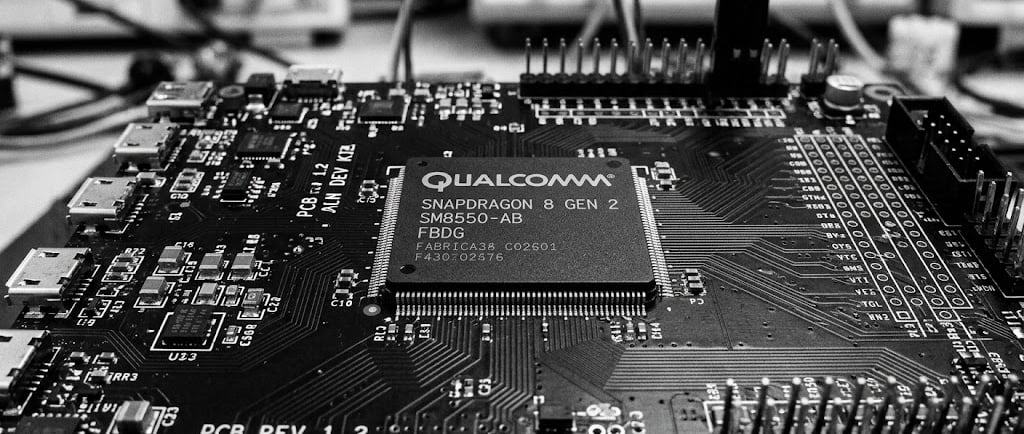
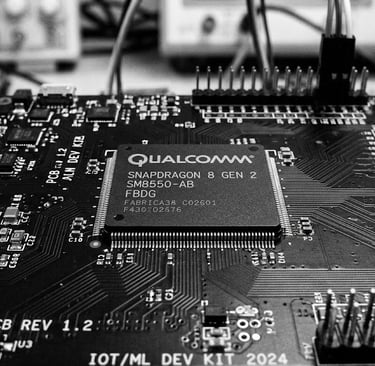
Birth of a Titan
For years, the Arduino Uno has been the definitive gateway into IoT, beloved for its simplicity and massive community. While boards like the ESP32 or Raspberry Pi offer power, Arduino’s accessible IDE and low learning curve kept it the gold standard for developers.
When Qualcomm moved to integrate Arduino into its ecosystem, skeptics feared the corporate giant would stifled the platform's grassroots spirit. Instead, the opposite occurred. This partnership birthed the Arduino Uno Q—a faster, more potent successor capable of running Edge AI. This leap was powered by the Dragonwing series, a processor lineup designed to bridge the gap between hobbyist ease and industrial-grade performance.
A Tale of Two Dragons: Snapdragon vs. Dragonwing
Qualcomm’s strategy focuses on clear separation: Snapdragon remains the heart of consumer electronics, while Dragonwing is the dedicated powerhouse for the Internet of Things (IoT). Though both share a lineage of high performance and low power consumption, they cater to entirely different worlds.
The Dragonwing family is categorized by its "IQ" tiers, each designed for a specific level of intelligence:
IQ10 Series (The Flagship): This is the undisputed "beast" of the lineup. It features an 18-core architecture delivering a staggering 700 TOPS (Trillions of Operations Per Second). This metric represents the combined AI muscle of the Neural (NPU), Graphics (GPU), and Tensor (TPU) units. With performance exceeding the 100+ TOPS threshold, the IQ10 is built for high-end humanoids, autonomous robotics, and advanced Unmanned Aerial Vehicles (UAVs).
IQ9 & IQ-X (The Industrial Core): Sitting in the mid-tier, these chips offer roughly 45 TOPS. They are the workhorses of the industrial sector, where precision and thermal management are the primary buzzwords for factory automation and smart infrastructure.
IQ8 & IQ6 (The Edge Tier): These represent the entry point, delivering up to 35 TOPS. You’ll find these in next-gen development boards like the Arduino Uno Q. They are perfectly optimized for localized Edge AI tasks, such as real-time image recognition and sensory data processing, without needing a cloud connection.
Under the Hood: The QRB2210 Family
The heart of the new development ecosystem is the QRB2210 chipset. Designed to appeal equally to high-growth startups and dedicated hobbyists, this chip packs industrial-grade power into a remarkably small 12mm x 12.4mm non-PoP (Package-on-Package) configuration.
Key Technical Specifications:
Processing Power: A 64-bit ARM Cortex Quad-Core CPU clocking in at 2.0 GHz, providing a massive jump in compute overhead for multitasking.
Graphics & Vision: An integrated Qualcomm Adreno GPU handles high-speed image processing and UI rendering directly on-chip.
Audio & Signal Intelligence: Advanced Digital Signal Processing (DSP) is shared between the main processor and the audio subsystem, allowing for low-latency voice and sensor data analysis.
Memory & Storage: Utilizing high-speed LPDDR4x SDRAM, the Arduino Uno Q comes in two powerful configurations:
Standard: 2GB RAM / 16GB eMMC storage.
Pro/Plus: 4GB RAM / 32GB eMMC storage.
Connectivity: Integrated Wi-Fi 5 and Bluetooth Low Energy (BLE) 5.0 standards ensure the board is ready for seamless IoT communication right out of the box.
The Verdict
The arrival of the Qualcomm Dragonwing series, specifically through the accessible Arduino Uno Q, marks a pivotal shift in the democratic nature of AI. We are moving past the era of 'connected' devices and entering the age of 'intelligent' ones. By putting industrial-grade silicon into the hands of hobbyists and startups alike, Qualcomm isn't just releasing a new chip—they are handing us the keys to the next industrial revolution. The only question left is: What will you build with 40 TOPS of power at your fingertips?